

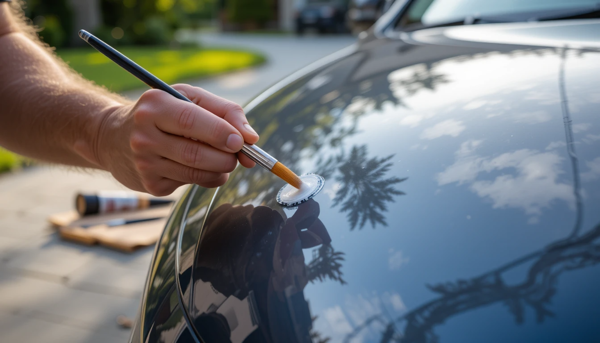
Best way to apply touch up paint? Discover expert steps, avoid mistakes, and get a smooth finish with these simple DIY tricks.
Best Way to Apply Touch Up Paint – Pro Tips for Flawless Results 🎯
Ever noticed a small chip or scratch on your car and thought, “How hard could it be to fix?”
If you’ve tried touch up paint before and ended up with a bumpy blob or mismatched color, you’re not alone. Touching up paint seems simple—until it’s not.
The best way to apply touch up paint is all about patience, preparation, and the right technique. Whether you’re covering a tiny stone chip or a deeper scratch, this guide will walk you through every step for a professional-looking finish—without the professional price.
What Is Touch Up Paint and When Should You Use It? 🎨
Touch up paint is a small bottle or pen filled with OEM-matched paint. It’s made to fix minor dings, chips, or scratches on your car’s surface.
Use it when:
- You spot small chips from road debris.
- There’s a scratch from a car door in the parking lot.
- You want to prevent rust from exposed metal.
Avoid it when:
- The damage is larger than a quarter.
- There are multiple deep layers of damage.
- You want a factory-perfect finish.
Why Getting It Right Matters 💡
Bad touch-up jobs stand out. They can make your car look worse than before. Done correctly, though, it can:
- Boost resale value
- Prevent rust and corrosion
- Improve appearance without repainting the whole panel
So, the difference between a sloppy fix and a sleek touch-up? That’s what we’ll cover next.
Prep Work Is Everything 🧽
Before you ever open that paint bottle, prep like a pro:
Here’s what you’ll need:
- Microfiber cloth
- Soap and water
- Isopropyl alcohol (70%+)
- Fine-grit sandpaper (600–2000 grit)
- Toothpick or fine brush
- Primer (if metal is exposed)
- OEM-matched touch up paint
- Clear coat
Clean the Area First 🚿
Even a tiny bit of dirt or wax can ruin your touch-up job. Follow this step:
- Wash the area with mild soap and warm water.
- Dry it completely using a microfiber towel.
- Wipe the area with isopropyl alcohol to remove wax or residue.
“If you wouldn’t eat off it, don’t paint over it.” 🧼
Lightly Sand Around the Chip ✍️
This step smooths edges and helps paint adhere better:
- Use 600 to 2000 grit sandpaper.
- Don’t overdo it—just feather the edges around the chip.
- Use a sanding block for even pressure.
This prepares the surface for a smooth blend, so your repair doesn’t stick out like a sore thumb.
Tape Off Surrounding Paint ✂️
To keep things tidy, mask the area:
- Apply painter’s tape around the chip.
- Leave a small border exposed—just the damage, no more.
- This keeps excess paint from bleeding out onto undamaged areas.
Pro Tip: Fold tape edges so you can remove them without disturbing wet paint. 🛠️
Add Primer If Needed 🧱
If the chip goes down to metal:
- Use a toothpick or small brush to dab auto primer into the spot.
- Let it dry completely (usually about 30 minutes to 1 hour).
- Don’t rush—primer sets the foundation for long-term success.
Shake, Don’t Stir: Mixing the Paint Properly 🌀
Before applying:
- Shake the bottle for at least 1–2 minutes.
- If it’s a pen applicator, test the flow on a piece of cardboard.
- Make sure the color is consistent and evenly mixed.
Apply Thin Layers—Not Blobs 🎯
The biggest rookie mistake? Applying too much paint at once. Here’s the right way:
- Use a fine brush or toothpick.
- Dab the paint gently into the chip—not all the way to the edge.
- Let each layer dry for 30–60 minutes before adding another.
- Build it up slowly until it’s level with the rest of the paint.
🚗 Touch Up Paint Application Tips Table
| Do This ✅ | Avoid This ❌ |
|---|---|
| Clean and sand the area | Skipping prep work |
| Use multiple thin layers | Applying thick, dripping paint |
| Allow proper dry time | Rushing between coats |
| Use OEM-matched paint | Using generic/unmatched color |
| Apply in controlled lighting | Painting in direct sunlight |
Add Clear Coat for Protection ✨
Once the paint dries (at least 24 hours is ideal), it’s time to seal it:
- Apply a small drop of clear coat.
- Let it cure for 1–2 days.
- This step restores gloss and protects the paint underneath.
Want that factory shine? Don’t skip this step.
Blend With Polishing Compound 🧼
After everything dries:
- Lightly polish the area with rubbing compound.
- Use a microfiber cloth and apply in circular motions.
- This blends the edges and removes any dull haze.
You’ll be amazed how this step smooths out minor imperfections. 🌟
Wax It to Seal the Deal 🧽
Finish with a layer of car wax:
- Wait 30 days after the paint job before waxing.
- Wax helps protect and blend the repaired area.
- It also gives a nice uniform shine.
What If You Mess Up? 😅
It happens. If your paint is too thick, uneven, or wrong:
- Use a paint remover pen or rubbing alcohol to clean it up.
- Start fresh with clean, prepped surface.
- Take your time—DIY touch up is as much about patience as skill.
🔧 Common Touch Up Paint Mistakes Table
| Mistake Made | Fix/Prevention Tip |
|---|---|
| Wrong paint color | Use OEM code from vehicle label |
| Too thick application | Sand down and reapply thin coats |
| Painted on dirty surface | Always clean with alcohol first |
| Forgot clear coat | Add it after paint fully dries |
| Didn’t wait between layers | Let each coat dry fully |
Best Conditions for Touch Up Painting 🌤️
When should you do it?
- Temperature: 60–80°F (16–27°C)
- Humidity: Low, under 50%
- Lighting: Indoors or shaded area
- Surface: Cool to the touch
Avoid painting in windy, humid, or rainy conditions. It messes up drying and may trap dust.
Should You Use a Paint Pen or Bottle? 🖌️
Paint Pen:
- Great for very tiny chips
- Harder to control on deeper scratches
Paint Bottle with Brush:
- Best for larger chips or scratches
- Offers more precision with toothpick or fine brush
Verdict: Most people get better results with a brush or toothpick than with paint pens. 🧠
🛠️ DIY Touch Up Paint Tools Comparison Table
| Tool Type | Best Use | Pros | Cons |
|---|---|---|---|
| Paint Pen | Small rock chips | Easy to use | Hard to control, thick blobs |
| Paint Bottle | Small scratches & deeper chips | More precise with brush | Takes more patience |
| Toothpick | Tiny, sharp chips | Ultra-precise application | Not great for big areas |
How Long Will It Last? 🕒
If done properly, a good touch up job can last several years. Key factors that affect longevity:
- Weather exposure
- Type of paint used
- Whether you added clear coat
- Surface prep quality
Want it to last longer? Keep it waxed and out of the sun when possible.
When to Call a Professional 👨🔧
Sometimes it’s worth handing the job off to a pro:
- If the scratch spans multiple panels
- You want a showroom-quality finish
- You’re planning to sell or trade in soon
A pro might charge $150–$300 for a panel repaint—but it may boost resale value even more.
Final Thoughts 🎯
Touching up paint isn’t just a cosmetic fix—it protects your car from rust, weather damage, and resale hits. The best way to apply touch up paint comes down to:
- Careful prep
- Thin, even layers
- The right materials
- Patience to let each step dry properly
Once you get the hang of it, it’s actually satisfying. A little effort now can make your car look newer, longer—and no one has to know it was a DIY job. 😉
FAQs
What’s the best way to fix tiny rock chips on my car?
Use OEM-matched touch up paint with a toothpick for precise, thin layers.
How long should I wait between touch up paint coats?
Wait 30 to 60 minutes between coats to ensure proper drying and bonding.
Can I apply touch up paint without sanding first?
You can, but sanding helps the paint bond better and look smoother.
Is clear coat necessary after touch up paint?
Yes, clear coat protects the new paint and restores factory shine.
What if the touch up paint doesn’t match perfectly?
Try blending the edges with polish or redo it with the exact OEM paint code.
References
https://www.cars.com/articles/how-to-touch-up-car-paint-1420684947347/
https://www.popularmechanics.com/cars/how-to/a21206/car-touch-up-paint/
https://www.consumerreports.org/cars/car-repair-maintenance/how-to-fix-car-paint-chips-and-scratches-a4573455463/

Leave a Reply