

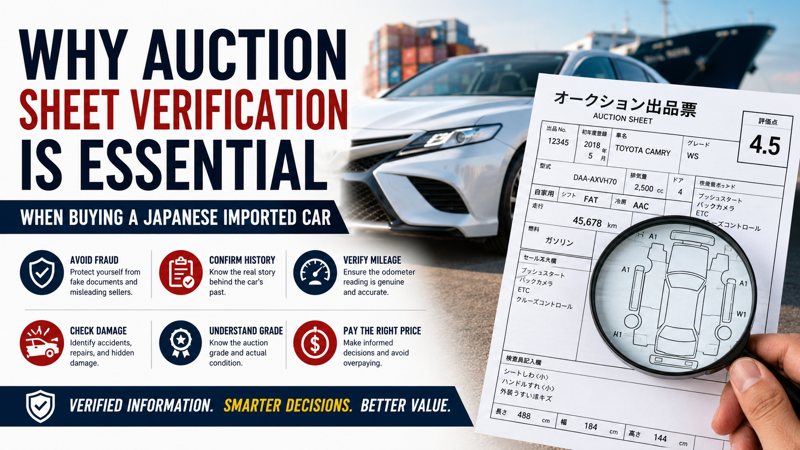
Auction Sheet Verification helps buyers confirm a Japanese imported car’s history, condition, and authenticity before purchase.
Japanese auction sheet verification is one of the most important steps when buying a Japanese imported car. It helps confirm the vehicle’s condition, mileage, repair history, and overall authenticity. By verifying the auction sheet, buyers can avoid fraud, reduce risks, and make a confident purchasing decision.
Have you ever wondered if the Japanese imported car you’re planning to buy is truly as good as the seller claims? A shiny exterior and clean interior can be misleading. The real story often lies in the vehicle’s auction sheet.
When purchasing a Japanese imported vehicle, you need accurate information. That’s where auction sheet verification becomes critical. It provides valuable insights into the car’s past and helps you avoid costly surprises later.
🚗 What Is An Auction Sheet Verification?
A Japanese auction sheet is a detailed inspection report prepared before a vehicle is sold at auction in Japan. It contains important information about the car’s condition, mileage, damage history, and auction grade. Professional inspectors carefully evaluate each vehicle and record their findings.
Auction sheet verification is the process of confirming that this report is genuine and accurate. It ensures that the auction sheet presented by a seller matches the original document issued at the auction house. This simple step can protect buyers from misleading information and fraudulent practices.
Many importers and dealers provide auction sheets to build trust. However, without verification, buyers cannot be certain that the document has not been altered or manipulated.
🔍 Why Japanese Imported Cars Are Popular
Japanese imported cars have earned a strong reputation worldwide. They are known for reliability, fuel efficiency, and excellent maintenance standards. Japanese vehicle owners often follow strict servicing schedules, which helps keep cars in excellent condition.
Another reason for their popularity is the wide selection available. Buyers can find everything from compact city cars to luxury sedans and performance vehicles. Many models also come with advanced features that may not be available in local versions.
Despite these advantages, buyers should never rely solely on appearances. Auction sheet verification adds an extra layer of protection and transparency.
📋 What Information Is Included In An Auction Sheet?
Auction sheets contain a wealth of valuable information. Understanding these details helps buyers make informed decisions and identify potential concerns before purchasing.
Some key details commonly found include:
- Vehicle make and model
- Manufacturing year
- Mileage reading
- Engine specifications
- Exterior condition
- Interior condition
- Accident history
- Auction grade
- Repair records
The document acts like a report card for the vehicle. It gives buyers a clear snapshot of the car’s condition at the time of auction.
| Information Category | Details Provided |
| Vehicle Identity | Make, model, year |
| Condition Report | Exterior and interior assessment |
| Mileage | Odometer reading |
| Repairs | Previous repairs and modifications |
| Grade | Overall auction rating |
🛡️ Protecting Yourself From Mileage Fraud
Mileage fraud remains one of the biggest concerns in the used car market. Some dishonest sellers tamper with odometers to make vehicles appear less used than they actually are.
Verified auction sheets help expose these practices. The mileage recorded during the auction can be compared with the current odometer reading. Any discrepancies may indicate tampering or inaccurate reporting.
A vehicle with lower mileage typically commands a higher price. That’s why verifying mileage data can save buyers thousands of dollars and prevent future mechanical issues.
⚠️ Identifying Hidden Accident Damage
Not all accident damage is easy to spot. A vehicle may look flawless after repairs, but structural issues could still exist beneath the surface. Hidden damage can affect safety, performance, and resale value.
Auction sheets often include detailed notes about accidents and repairs. Inspectors record damaged areas, replaced panels, and repaired sections. This information helps buyers understand what happened to the vehicle before import.
Knowing the repair history allows buyers to evaluate whether the vehicle remains a good investment or poses unnecessary risks.
⭐ Understanding Auction Grades
Japanese auction houses use grading systems to evaluate vehicles. These grades provide a quick overview of a car’s condition and overall quality.
While grading scales may vary slightly, higher grades generally indicate better condition. Lower grades often suggest wear, repairs, or damage.
Here is a simplified example:
| Auction Grade | General Meaning |
| 6 | Nearly new condition |
| 5 | Excellent condition |
| 4.5 | Very good condition |
| 4 | Good condition |
| 3.5 | Average condition |
| 3 | Significant wear or repairs |
Buyers should always verify the grade because dishonest sellers sometimes misrepresent it to justify higher prices.
🚘 Revealing The Vehicle’s True Condition
A car’s appearance can be deceiving. Fresh paint, polished surfaces, and professional detailing can hide imperfections from casual inspection.
Auction sheet verification reveals details that may not be visible during a physical examination. It highlights scratches, dents, rust, and other cosmetic flaws noted by auction inspectors.
This information provides a more complete understanding of the vehicle’s actual condition. Buyers can make better decisions based on facts rather than appearance alone.
💰 Helping Buyers Avoid Overpaying
Every vehicle has a fair market value. That value depends heavily on condition, mileage, accident history, and maintenance records.
Without verified auction data, buyers may pay more than the vehicle is worth. Sellers may present incomplete or inaccurate information to justify premium pricing.
Verified auction sheets help establish realistic expectations. Buyers gain confidence during negotiations and can better determine whether the asking price is reasonable.
🔧 Understanding Previous Repairs And Modifications
Many imported vehicles undergo repairs or modifications during their lifetime. Some changes improve performance or appearance, while others may create future maintenance challenges.
Auction sheets often document significant repairs and modifications. This includes replaced body panels, aftermarket parts, and mechanical changes.
Knowing about these alterations helps buyers evaluate compatibility, reliability, and future repair costs. It also reduces the likelihood of unexpected surprises after purchase.
📈 Improving Resale Value Confidence
A verified auction sheet can become a valuable asset when it’s time to sell the vehicle. Future buyers appreciate transparency and documented vehicle history.
Providing verified auction records demonstrates honesty and builds trust. Buyers often feel more comfortable purchasing vehicles with well-documented backgrounds.
This transparency can help maintain stronger resale value and shorten the selling process.
🔎 Detecting Fake Auction Sheets
Unfortunately, counterfeit auction sheets exist. Some dishonest sellers alter grades, mileage figures, or damage reports to make vehicles appear more attractive.
Professional verification services compare auction sheet details against official auction databases. This process helps identify forged documents and altered records.
Warning signs may include:
- Missing auction house details
- Unusual formatting
- Inconsistent mileage records
- Incorrect vehicle information
- Suspicious grading discrepancies
A verified document provides reassurance that the information is legitimate.
🌍 Why Overseas Buyers Need Verification Even More
International buyers face unique challenges. They often purchase vehicles without physically inspecting them first. This creates additional risks and uncertainties.
Auction sheet verification becomes especially important when buying from another country. It provides an independent assessment of the vehicle before shipping.
For overseas buyers, verified auction data serves as a trusted source of information. It reduces reliance on seller descriptions and promotional photos.
| Buying Risk | How Verification Helps |
| Mileage Fraud | Confirms recorded mileage |
| Accident History | Reveals previous damage |
| Fake Documents | Identifies altered records |
| Overpricing | Supports accurate valuation |
| Hidden Defects | Provides inspector observations |
📊 Supporting Better Purchasing Decisions
Smart buyers rely on data rather than emotions. Auction sheet verification provides objective information that helps evaluate whether a vehicle meets expectations.
Instead of guessing about condition or history, buyers gain access to documented facts. This information improves confidence throughout the purchasing process.
Making informed decisions reduces the chances of regret and unexpected expenses later.
🤝 Building Trust Between Buyers And Dealers
Reputable dealers understand the importance of transparency. Many willingly provide auction sheet verification because it demonstrates honesty and professionalism.
Verified records help establish credibility. Buyers are more likely to trust dealers who openly share vehicle history information.
This trust creates a smoother buying experience and encourages long-term customer relationships.
🚨 Common Mistakes Buyers Make
Many buyers focus only on appearance, price, or features. While these factors matter, ignoring vehicle history can lead to costly mistakes.
Common mistakes include:
- Skipping auction sheet verification.
- Trusting seller claims without proof.
- Ignoring accident history.
- Overlooking mileage discrepancies.
- Failing to understand auction grades.
Avoiding these mistakes significantly improves the chances of finding a reliable imported vehicle.
📝 How To Verify An Auction Sheet
The verification process is usually straightforward. Several services specialize in authenticating Japanese auction records.
Typical steps include:
- Obtain the auction sheet copy.
- Locate the auction reference number.
- Submit the details to a verification service.
- Compare results with seller information.
- Review any discrepancies carefully.
Taking these steps before finalizing a purchase can save significant time, money, and frustration.
🎯 Why Verification Should Never Be Skipped
Some buyers skip verification to save time or money. However, this small shortcut can create major problems later. The cost of verification is minimal compared to the potential financial losses from purchasing a problematic vehicle.
Verification acts as a safeguard against fraud, hidden damage, and inaccurate information. It provides clarity in a market where transparency is not always guaranteed.
A few extra minutes spent verifying records can prevent years of ownership headaches and unexpected repair bills.
✅ Final Thoughts
Buying a Japanese imported car can be an excellent investment. These vehicles are known for quality, reliability, and long-term value. However, even the best-looking vehicle may have a hidden history that affects its performance and worth.
Auction sheet verification provides critical information about mileage, accident history, repairs, condition, and authenticity. It protects buyers from fraud, supports informed decisions, and increases confidence throughout the purchasing process.
Before signing any purchase agreement, make auction sheet verification a priority. It is one of the smartest and most effective ways to ensure you get exactly what you are paying for.
FAQs
Is Auction Sheet Verification Worth It For Imported Cars?
Yes, it is absolutely worth it. Verification helps confirm the vehicle’s history and condition. It can prevent expensive mistakes and improve buying confidence.
Can Auction Sheets Show Previous Accident Damage?
Yes, auction sheets often include accident and repair information. Inspectors record visible damage and structural concerns. This helps buyers understand the vehicle’s past.
How Can I Verify A Japanese Auction Sheet Online?
You can use professional verification services that access official auction databases. They compare auction records with the provided document. The results confirm authenticity and accuracy.
Do All Japanese Imported Cars Have Auction Sheets?
Most vehicles sold through Japanese auctions have auction sheets. However, availability depends on the auction house and record retention policies. Buyers should request documentation whenever possible.
Can A Verified Auction Sheet Increase Resale Value?
Yes, verified documentation builds trust with future buyers. It demonstrates transparency and vehicle history accuracy. This can help support stronger resale value over time.



Leave a Reply